
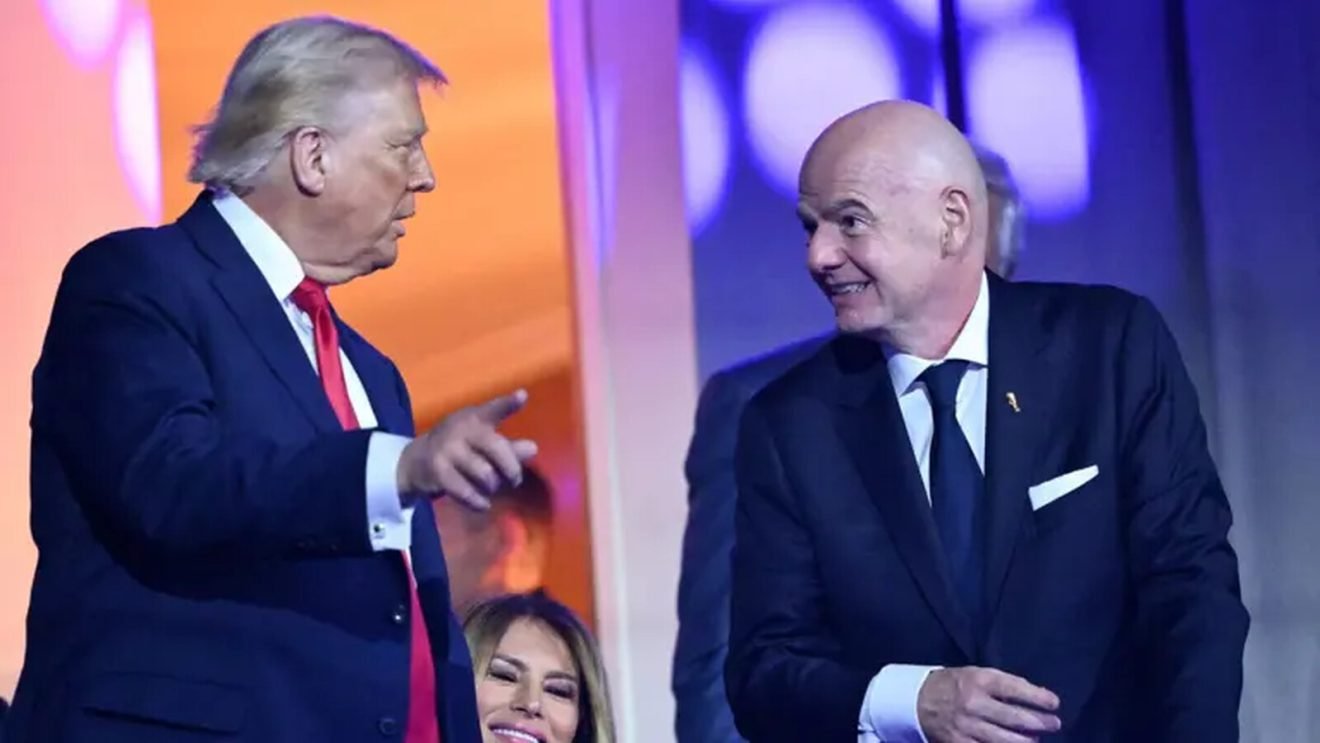
A political storm is colliding with global football after U.S. President Donald Trump was linked to efforts to remove Iran from the 2026 FIFA World Cup. However, world football’s governing body, FIFA, has reportedly rejected the idea outright, signaling that the tournament will proceed without political interference.
According to reports from BBC Sport and other international outlets, the proposal was informally pushed by Paolo Zampolli, a close associate of Trump, who suggested that Italy should replace Iran in the tournament lineup. The suggestion came amid escalating geopolitical tensions and ongoing conflict involving Tehran.
Zampolli openly confirmed his position in an interview with the Financial Times, stating that Italy — a four-time world champion — has the “pedigree” to justify inclusion. “It would be a dream to see Italy in a World Cup hosted by the United States,” he said, acknowledging his personal ties to the country.
Despite the political push, FIFA President Gianni Infantino has taken a firm stance. He made it clear that Iran’s participation is not under review. “It is a footballing nation. We want them to play, and they will play,” Infantino stated, dismissing any notion of alternative plans or replacements.
Sources close to the matter suggest that the proposal may have also been tied to diplomatic tensions between Trump and Italian Prime Minister Giorgia Meloni, following public disagreements involving the Vatican and comments made by Pope Leo XIV on the Middle East conflict. The exchange highlighted growing divisions between political figures over war, diplomacy, and global security.
Meanwhile, Iran has responded with confidence. Government spokesperson Fatemeh Mohajerani confirmed that the country is fully prepared to compete in the tournament, emphasizing that football should remain separate from political disputes.
The 2026 FIFA World Cup — hosted by the United States, Canada, and Mexico — is scheduled to run from June 11 to July 19. Iran has already secured its place and is set to compete in Group G alongside Belgium, Egypt, and New Zealand, with matches expected to be played on U.S. soil.
Italy, on the other hand, failed to qualify after a shock playoff defeat to Bosnia and Herzegovina, marking its third consecutive absence from the world’s biggest football tournament — a fact that further complicates any argument for a late inclusion.
The situation highlights a growing tension between politics and sport on the global stage. While governments may attempt to influence international competitions, FIFA’s response sends a clear message: the World Cup will remain governed by sporting merit, not political pressure.
Sources: BBC Sport; Financial Times; Notícias ao Minuto; official statements from FIFA and government representatives.