
Iran’s highest authority has issued one of its sternest warnings yet to the United States, saying that any attempt by Washington to launch a military strike would set off a wider war across the Middle East rather than a confined conflict.
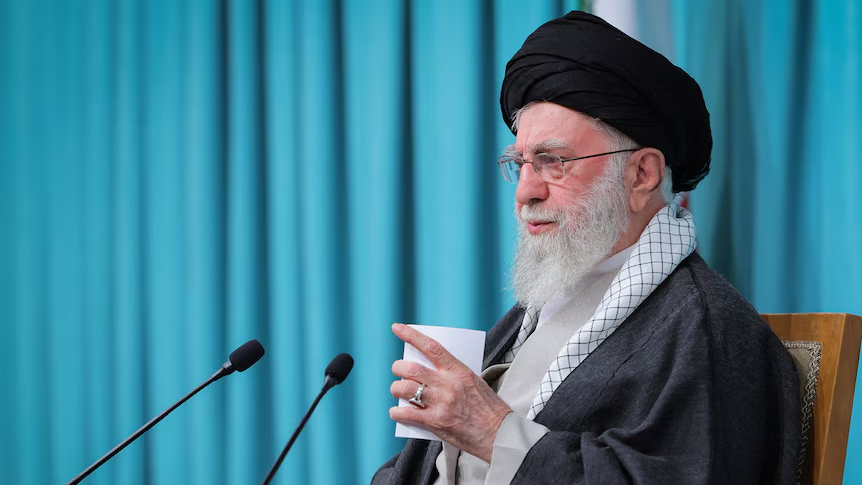
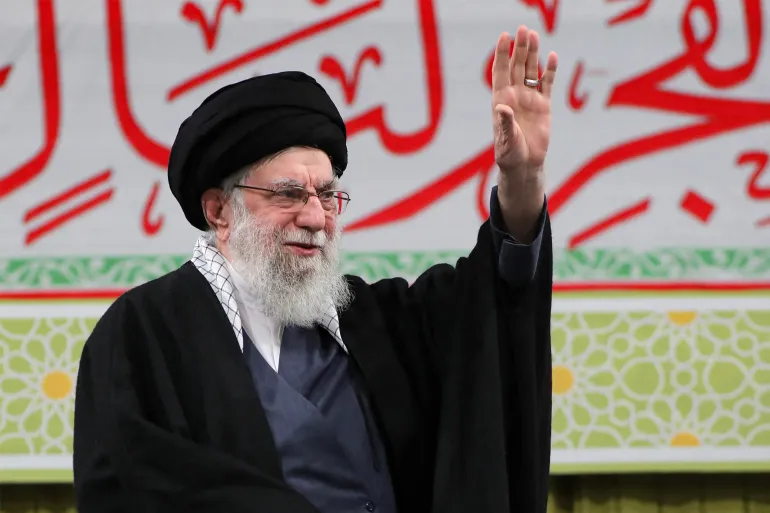
Speaking from Tehran on Sunday, Supreme Leader Ayatollah Ali Khamenei told state media and a domestic crowd that while Iran does not seek confrontation, an attack by the U.S. would inevitably escalate into a “regional war” involving multiple countries and actors beyond Iran’s borders.
“The Americans should know that if they start a war, this time it will be a regional war,” Khamenei said, according to Iranian news agencies. He emphasized that Iran does not intend to be the aggressor, but will respond decisively “against anyone who attacks or harasses” Iranian soil.
Military Buildup and Diplomatic Pressures
The warning comes amid heightened tension between Tehran and Washington, with the U.S. deploying significant naval forces — including the USS Abraham Lincoln aircraft carrier and accompanying warships — to waters near Iran in recent weeks. U.S. officials say this buildup is meant as a deterrent while pushing Tehran toward denuclearization talks and restraint in its internal security policies.
Despite these deployments, President Donald Trump publicly suggested there is still room for negotiations and hinted at the possibility of a diplomatic agreement that could prevent military confrontation. _sky news
Crackdown and Internal Unrest
Iran’s warning also reflects internal pressures that have shaken the Islamic Republic. A wave of nationwide protests that began late last year over economic hardship and political grievances challenged the regime’s stability. Tehran labeled the unrest a “coup attempt,” with thousands arrested and an official death toll running into the thousands according to human rights groups. _Geo news
Khamenei’s remarks tied the foreign threat narrative to this domestic unrest, framing both as components of a broader struggle between Iran and its detractors abroad.
Broader Implications for the Middle East
Analysts warn that a direct U.S. attack on Iran could rapidly draw in regional powers. Iran maintains close ties with allied groups and governments across the Middle East, including non-state actors in Iraq, Syria, Lebanon, and Yemen. A confrontation would therefore risk pulling multiple fronts into open conflict, disrupting global energy markets and heightening instability in an already fraught region.
At the same time, Iran’s Parliament has taken provocative diplomatic steps by designating European Union militaries as “terrorist groups” in retaliation for the EU’s prior designation of Iran’s Revolutionary Guard Corps, further complicating European diplomatic efforts.
Outlook: Diplomacy or Escalation?
While military posturing has intensified, both sides continue to signal occasional openness to dialogue. Officials in Tehran have suggested willingness to engage in “fair” negotiations that respect Iran’s defensive needs, and Washington has reiterated the possibility of talks to avert conflict.
However, with public rhetoric on both sides growing sharper and the presence of major naval assets in the region, many analysts believe that the next few weeks will be critical in determining whether escalatory threats yield to diplomatic solutions or spiral into broader confrontation. (vozafricano)